Learning by Absorbing: The Science and Culture of Everyday Habits
Quite often modern parents are nowadays are enrolling their children for fitness classes, nutritional charts, counselling etc. However, studies have shown that our daily routines and daily interactions have more profound impact on a child’ health and overall wellness. Comprehensive child wellness involves the development of critical thinking, emotional regulation, meaningful interpersonal connections, resilience. Consequently, wellness should be viewed not as a static goal, but as a continuous, lifelong endeavor.
The science behind it
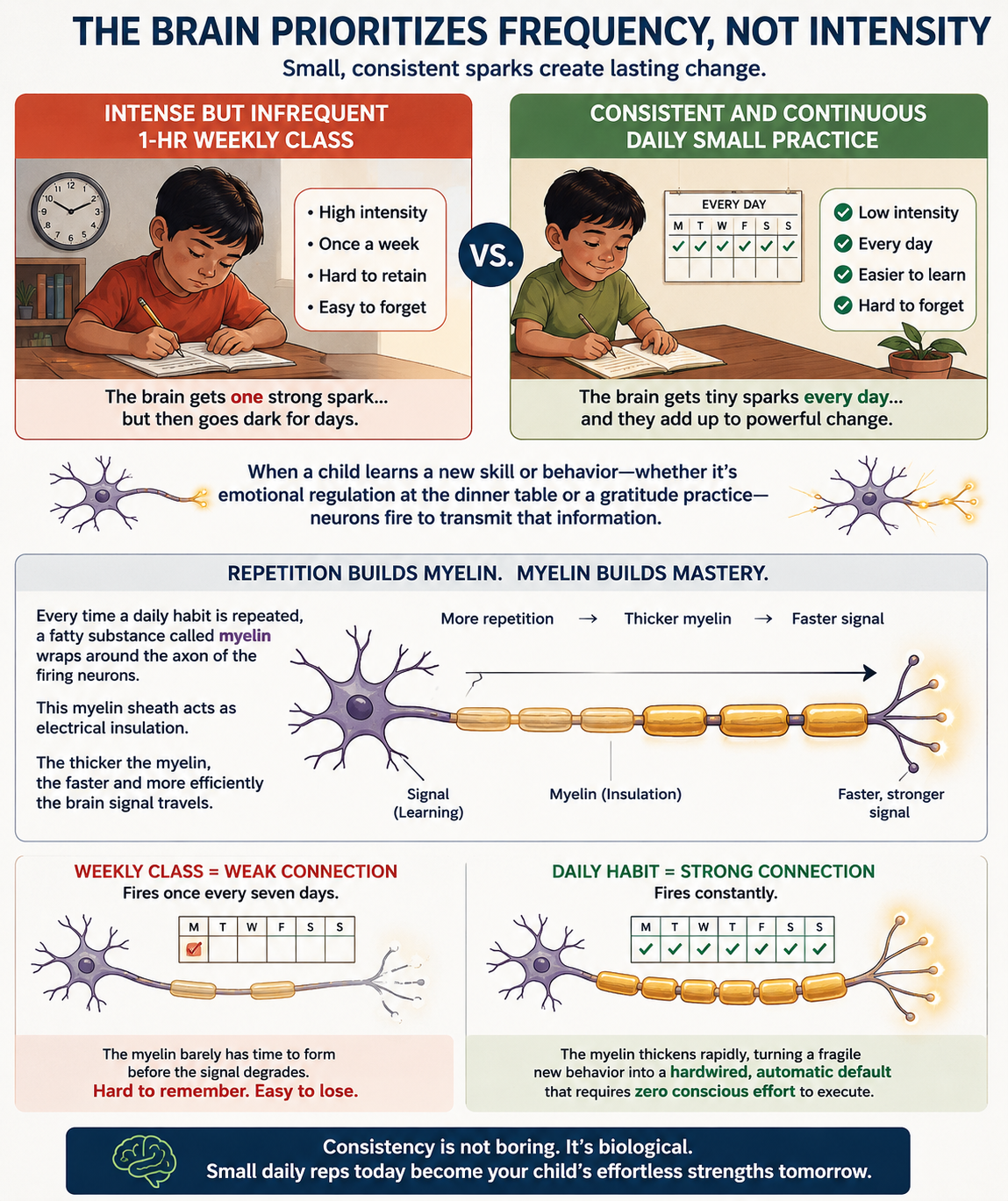
The human brain doesn’t priortise intensity of an experience but it priortizes its frequency.
The regular 1-hr class we send our kids to is more of a intense experience where kid needs to learn in that particular hour. However, a continious learning is a much better experience than that 1hr of continious focus.
When a child learns a new skill or behavior—whether it's emotional regulation at the dinner table or a gratitude practice—neurons fire to transmit that information.
Every time a daily habit is repeated, a fatty substance called myelin wraps around the axon of the firing neurons. This myelin sheath acts as electrical insulation. The thicker the myelin, the faster and more efficiently the brain signal travels.
A weekly class fires a neural circuit once every seven days. The myelin barely has time to form before the signal degrades.
A daily habit fires the circuit constantly. The myelin thickens rapidly, turning a fragile new behavior into a hardwired, automatic default that requires zero conscious effort to execute.
Synaptic Pruning: The "Use It or Lose It" Principle
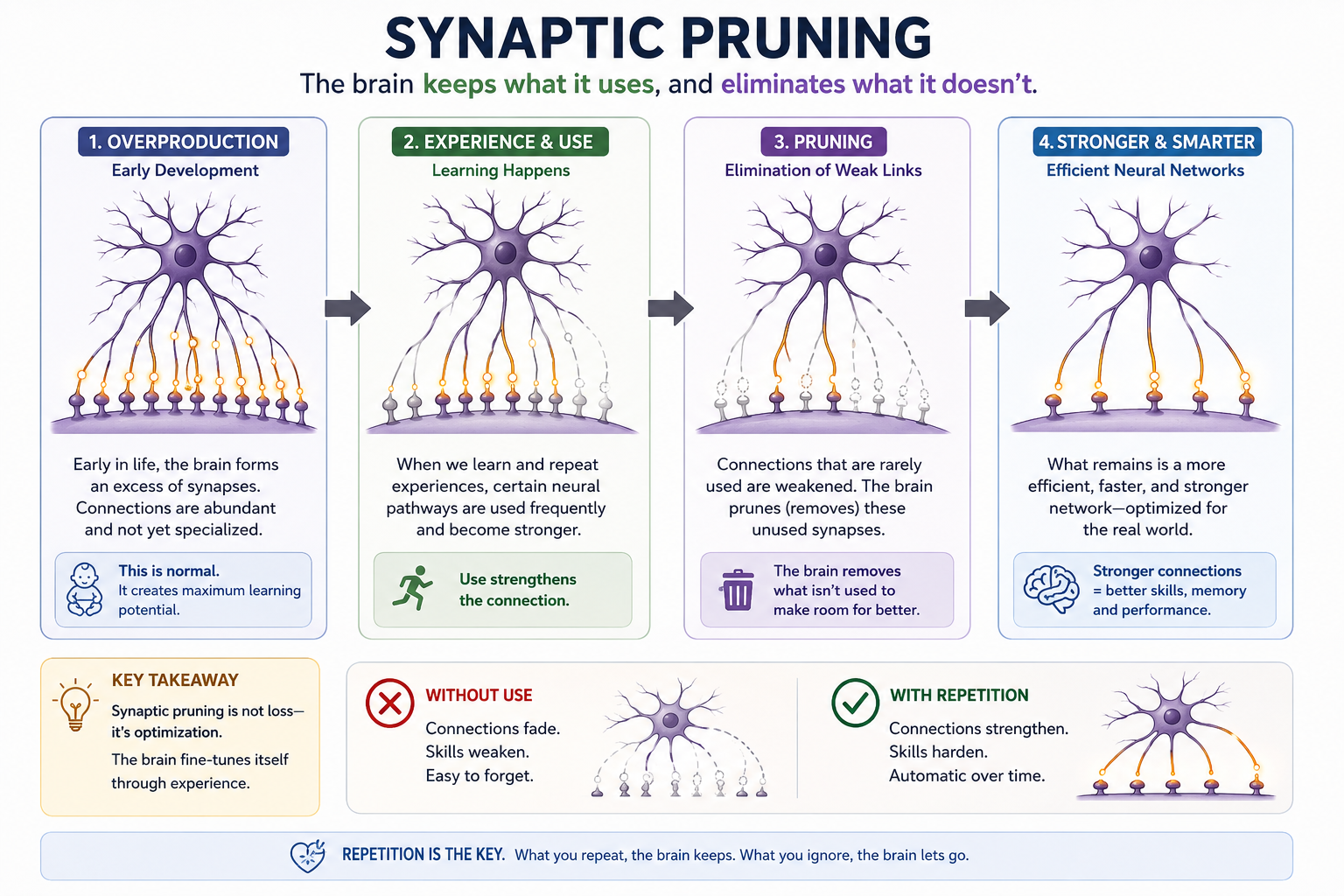
A child’s brain is born with a lot of neural connections. Between early childhood and adolescence, the brain undergoes a massive remodeling process called synaptic pruning.During the pruning process, the body literally deletes neural connections that aren't used frequently. Occasional interventions (a one-off wellness campaign or an isolated resilience workshop) simply don't generate enough electrical traffic to survive this pruning proces.
The daily rhythms we learn from our family or from our surroundings stay with the child and doesn’t become a part pruning process.